

Premium Architectural Fountains
Bring Paradise Home
Handcrafted fountains and water sculptures that transform any space into a sanctuary of tranquility and refinement.
Premium Architectural Fountains
Bring Paradise Home
Handcrafted fountains and water sculptures that transform any space into a sanctuary of tranquility and refinement.

Not every garden or patio has an electrical outlet where you'd like to put a fountain. That's one reason solar fountains are so popular. They use sunlight to power a small water pump, so you can enjoy moving water without having to run electricity across your yard.
Fountains.com carries solar wall fountains, solar birdbath fountains, tiered fountains, and smaller bubbling designs. Some operate only while the sun is shining. Others have rechargeable batteries that allow the water to keep flowing for a while after the sun goes down. Take a look at our solar collection below, or browse our other outdoor fountains and garden fountains.
$245.00
Arrives in 7–15 business days
$269.00
Arrives in 7–15 business days
$265.00
Arrives in 7–15 business days
$289.00
Arrives in 7–15 business days
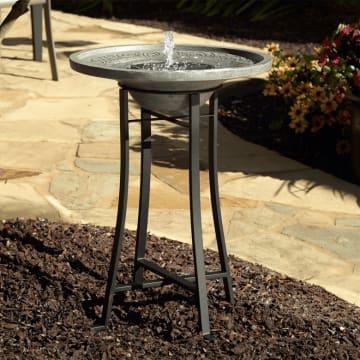
$279.99
Arrives in 7–10 days
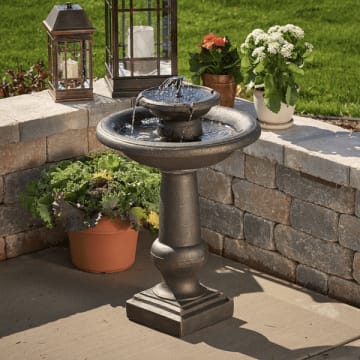
$349.99
Arrives in 7–10 days
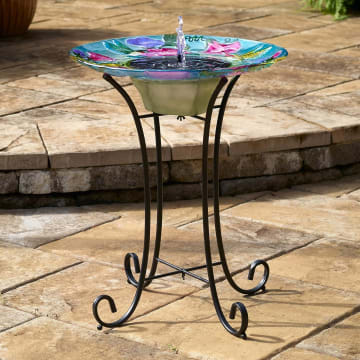
$169.99
Arrives in 7–10 days
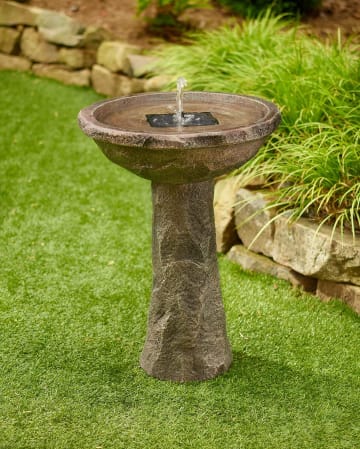
$299.99
Arrives in 7–10 days
$169.99
Arrives in 7–10 days
$285.00
Arrives in 7–15 business days
$274.85
Arrives in 7–15 business days
$315.00
Arrives in 7–15 business days
$245.00
Arrives in 7–15 business days
$265.00
Arrives in 7–15 business days

$265.00
Arrives in 7–15 business days
$359.00
Arrives in 7–15 business days

$295.00
Arrives in 7–15 business days
$399.00
Arrives in 7–15 business days
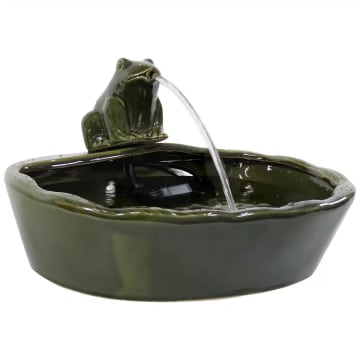
$129.00
Arrives in 7–15 business days
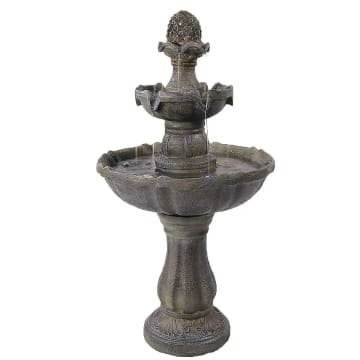
$355.00
Arrives in 7–15 business days
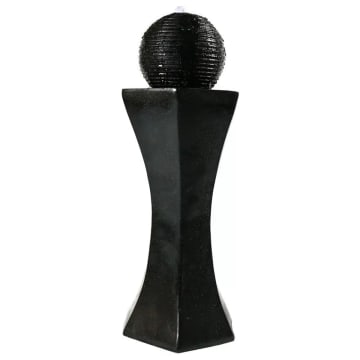
$385.00
Arrives in 7–15 business days
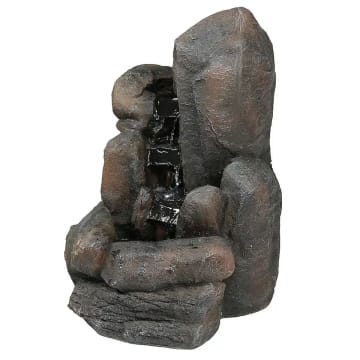
$295.00
Arrives in 7–15 business days
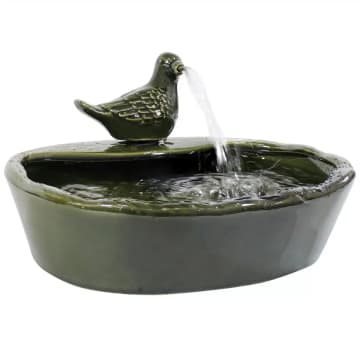
$129.00
Arrives in 7–15 business days
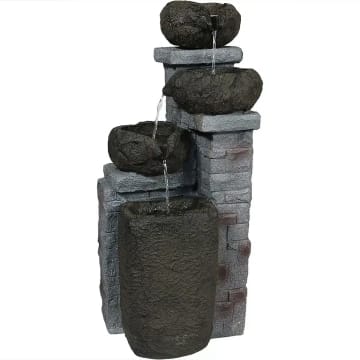
$355.00
Arrives in 7–15 business days
A solar water fountain operates much like an ordinary electric fountain. A pump pulls water from the reservoir and sends it back through the fountain, where it flows into the basin and circulates again.
The difference is where the electricity comes from.
Instead of using a wall outlet, a solar powered fountain has a panel that collects sunlight and generates power for the pump. On basic models, the pump operates when there's enough sunlight reaching the panel.
If a cloud moves across the sun, you might notice the water flow slowing down. Under heavy cloud cover, it may stop altogether. That's normal for a direct-solar pump.
Some fountains have a rechargeable battery as well. The panel charges the battery during sunny periods, and the stored electricity can be used when direct sunlight isn't available. Exactly how that works depends on the model.
Most solar fountains don't require an outdoor electrical outlet, but that doesn't mean they're completely wireless. Many have a cord connecting the panel to the pump. It's worth checking the cord length, particularly if you plan to place the panel away from the fountain.
There are several styles to choose from, and each works a little differently depending on the size of the basin and how the water moves.
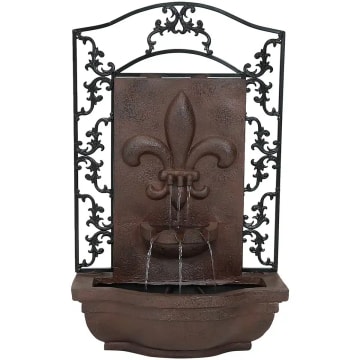
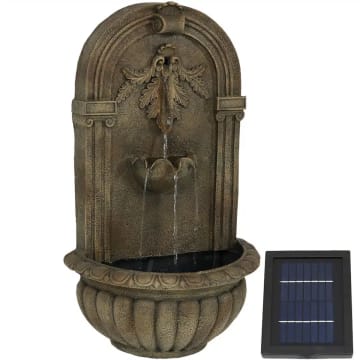
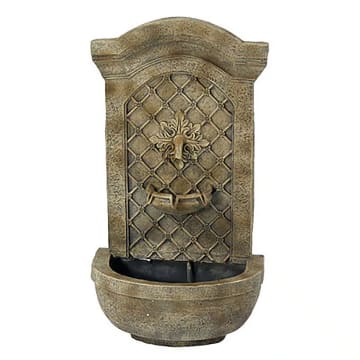
A solar wall fountain can work nicely against a patio wall, along a courtyard, or beside an outdoor seating area. Water typically comes out of a spout or upper bowl and flows into a basin below.
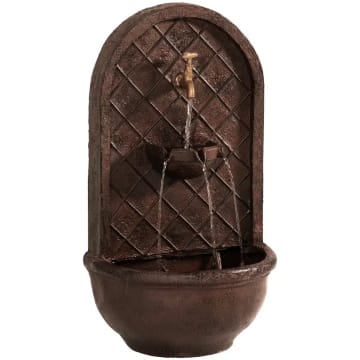
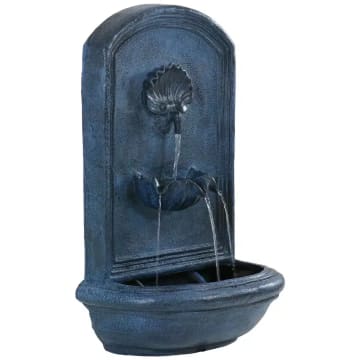
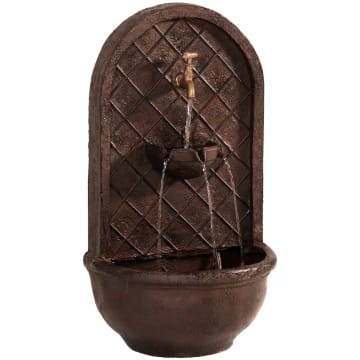
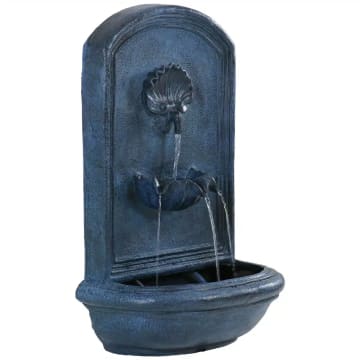
Our Messina and Seaside solar wall fountains are examples of more traditional designs, including versions with battery backup.
Before ordering, check whether the fountain is freestanding or needs to be secured to a wall. Also look at the overall depth, especially if you're working with a narrow patio.
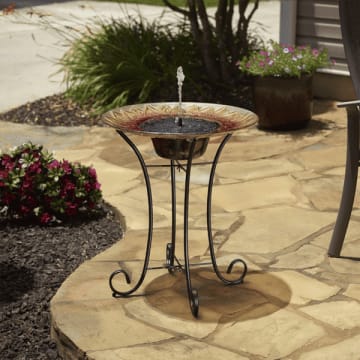
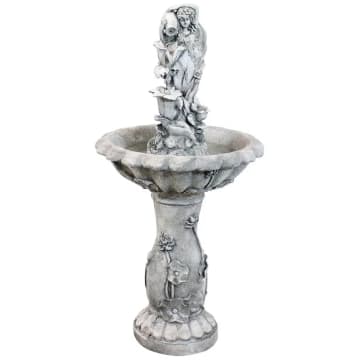
If you enjoy watching birds in your garden, a solar birdbath fountain is worth considering. The pump keeps water moving, usually with a small bubbler, spray, or gentle stream.
Birds need somewhere comfortable to stand and drink. A shallow basin with a stable edge is generally more inviting than one with deep water or a strong spray.
Placement matters, too. Putting the birdbath somewhere you can see it from a window makes it easier to enjoy, but the solar panel still needs enough sunlight to operate.
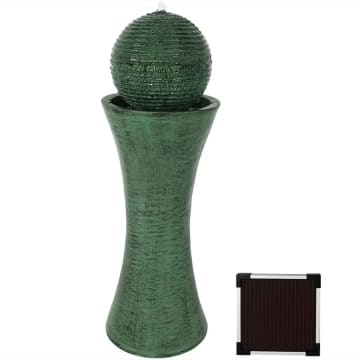
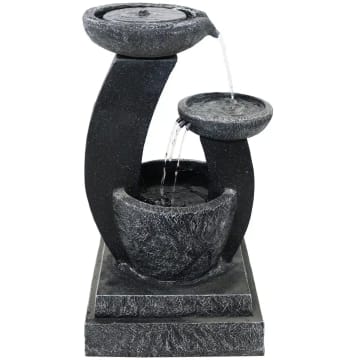
Tiered solar fountains have the familiar look of a traditional garden fountain, with water moving from one bowl to the next.
Some are compact enough for a patio, while others are better suited to garden beds or open areas. The sound depends on the height of the water drops and how much water the pump moves.
A two-tier design with gentle flow may be fairly quiet. A larger fountain with several levels can produce a more noticeable trickling sound.
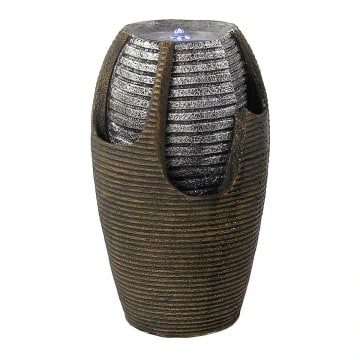
Bubbling pot fountains are a good choice when you want a little water movement without a tall structure. Water rises from the top of the pot, runs down the sides, and returns to a reservoir.
They're often used near patio furniture, along garden paths, or among plants. Check the overall dimensions and water capacity, since smaller reservoirs can need refilling more often during hot weather.
The easiest way to decide between solar and electric is to think about where the fountain will go and when you want it running.
If you have a sunny spot in the garden but no electrical outlet nearby, solar makes a lot of sense. You won't need to run an extension cord across the yard or add an outlet just to power the fountain.
There's also no household electricity cost for operating a fully solar-powered pump.
But there is a tradeoff.
A plug-in fountain can run consistently, including overnight, as long as it has electricity. A direct-solar fountain relies on sunlight, so its performance changes throughout the day. Battery-equipped models offer more flexibility, but they still depend on having enough stored energy.
Water flow can differ as well. Many smaller solar fountains have relatively gentle pumps. Larger plug-in fountains may have more powerful pumps capable of moving greater amounts of water.
If you mainly want a fountain running during sunny afternoons, solar could be a great fit. If you want strong water movement or a fountain that runs every evening regardless of the weather, consider an electric model.
You can compare more designs in our Outdoor Fountains collection.
You can have a perfectly good solar fountain that barely runs simply because the panel isn't getting enough sun.
Before deciding where to put the fountain, watch how sunlight moves across your yard during the day. An area that looks sunny at breakfast might be shaded by the house or trees by early afternoon.
For many solar fountains, several hours of direct sunlight are needed for good performance. Around six hours is a useful starting point for planning, but the manufacturer's specifications should take priority.
Battery-equipped fountains may need longer charging periods, particularly if you plan to use them after sunset.
Some models come with a separate solar panel attached by a cable. This gives you more flexibility. The fountain itself can sit in a location with partial shade while the panel is positioned somewhere that receives better sunlight.
Just make sure the included cable is long enough. Also consider where the panel will sit so it won't be blocked by growing plants or garden furniture.
Finally, place the fountain on a stable, level surface. A fountain that leans slightly can spill more water on one side, which means more frequent refilling and potentially less water reaching the pump.
If you'd like your fountain running while you're sitting outside in the evening, look for a solar fountain with battery backup.
These fountains use a rechargeable battery to store electricity generated by the solar panel. Depending on the model, the battery may keep the pump operating when clouds pass overhead or allow the fountain to run after sunset.
Some products use the term solar on demand. These systems may let you choose when to use stored battery power rather than running the pump continuously whenever sunlight is available.
For example, you might charge the battery during the afternoon and switch the fountain on later when you're outside.
Don't assume every battery-equipped fountain works this way, though. Some use battery power automatically, and others have different operating modes.
Battery runtime also varies. A fully charged battery might run a particular pump for several hours, but that doesn't mean you'll get the same performance every night. Cloudy weather, shorter winter days, battery age, and pump settings all make a difference.
Before purchasing, check how the battery charges, whether it can be replaced, and how long the manufacturer expects the fountain to run under normal conditions.
If nighttime operation is important to you, those details matter more than simply seeing the words "battery backup" in a product description.
Solar fountains don't require much complicated upkeep, but they aren't completely maintenance-free. A few small things can make a noticeable difference in how well they run.
Keep the solar panel clean. Pollen, dust, and bird droppings can collect on the panel and reduce the sunlight reaching it. Clean it gently using the method recommended by the manufacturer.
Watch the water level. Water evaporates quickly in hot weather. Wind and splashing can also lower the level. Check the basin regularly so the pump doesn't run dry.
Clear out leaves and debris. Outdoor fountains collect dirt, leaves, and other material over time. If the water flow slows down, check the reservoir and pump intake for obstructions.
Look at the panel before assuming the pump has failed. When a solar fountain stops running, insufficient sunlight is one of the first things to check. Make sure the panel isn't shaded or dirty and inspect accessible connections for damage.
Pay attention to the battery. If your fountain has battery backup, follow the charging and storage instructions. Rechargeable batteries don't last forever, and some models allow them to be replaced.
Prepare for freezing weather. Water left inside a fountain can freeze, expand, and damage the basin or pump. Many models need to be drained, with the pump or fountain stored before temperatures drop below freezing. Follow the care instructions for your particular model.
The biggest things to remember are simple: keep the water topped up, the panel clean, and the pump free of debris.
Most basic solar fountains need direct sunlight to operate properly. If the panel is shaded, the water flow may slow down or stop. A solar fountain with battery backup may continue running from stored power, but that depends on how much charge is available and how the particular system works.
Yes, but only if it has a suitable battery system or another source of power. A direct-solar fountain without a battery will stop when there isn't enough sunlight. If evening use is important, look for a model with battery backup and check its expected runtime.
Many models perform best with several hours of direct sun each day. Six hours is a reasonable starting point when choosing a location, although some fountains may need more or less. Battery-equipped models also need enough sunlight to recharge. Check the manufacturer's recommendations for the model you're considering.
It depends on the quality of the components, weather exposure, water conditions, and how well they're maintained. Solar panels often last considerably longer than the pumps and rechargeable batteries used with them. Before buying, check the warranty and whether replacement parts are available.
Some fountain materials can remain outdoors, but water left in the basin, pump, or tubing may freeze and cause damage. Many manufacturers recommend draining the fountain and storing the pump or the entire unit during freezing weather. Always follow the instructions for your particular model.
Some do, but it depends on the pump. Smaller solar fountains often have gentler water flow, and direct-solar models may slow down when sunlight is limited. Plug-in fountains generally provide more consistent performance and are available with higher-capacity pumps. Compare the pump specifications if water flow is an important factor.
It may. Moving water can catch a bird's attention, especially in a garden where water isn't otherwise available. Birds generally prefer shallow water, a stable place to land, and a gentle flow rather than a strong spray. Keeping the birdbath clean and placing it in a suitable location are just as important as having the pump running.