

Premium Architectural Fountains
Bring Paradise Home
Handcrafted fountains and water sculptures that transform any space into a sanctuary of tranquility and refinement.
Premium Architectural Fountains
Bring Paradise Home
Handcrafted fountains and water sculptures that transform any space into a sanctuary of tranquility and refinement.

The right outdoor fountain can make a backyard, garden, patio, or courtyard feel like a completely different space. Some people prefer the sound of water spilling from a traditional tiered fountain. Others want a simple bubbling bowl or a modern water wall.
At Fountains.com, you'll find garden fountains, tiered fountains, wall fountains, sphere fountains, solar fountains, and fire & water features. Our selection includes cast stone, marble, copper, stainless steel, and lightweight materials in a range of sizes and finishes. If you have a particular size or design in mind, we also offer custom fountains.
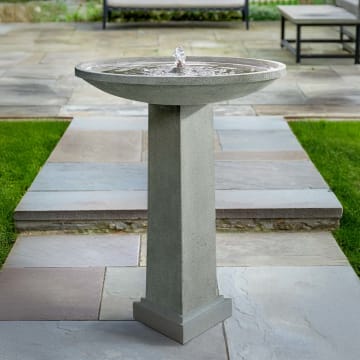
From $1,149.99
Arrives in 2–4 wks
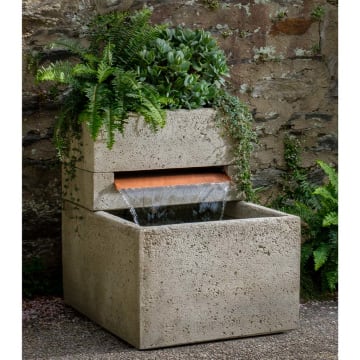
From $1,499.99
Arrives in 2–4 wks
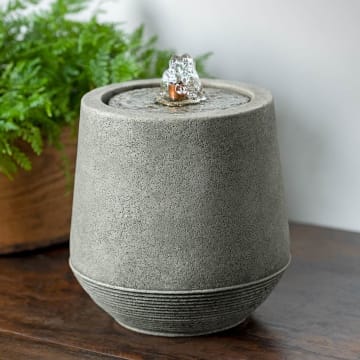
From $249.99
Arrives in 2–4 wks
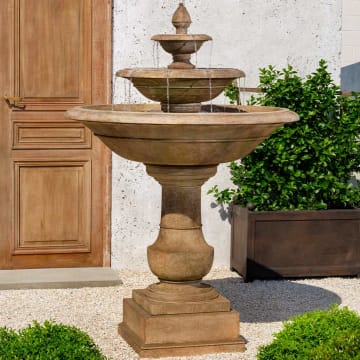
From $4,299.99
Arrives in 2–4 wks
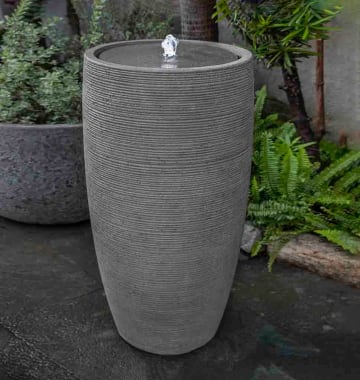
From $1,014.99
Arrives in 2–4 wks
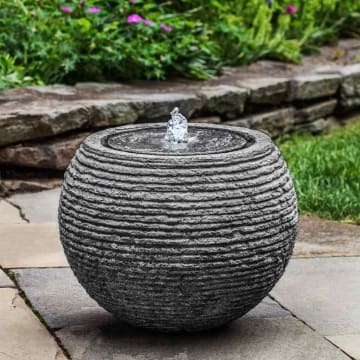
From $529.99
Arrives in 2–4 wks
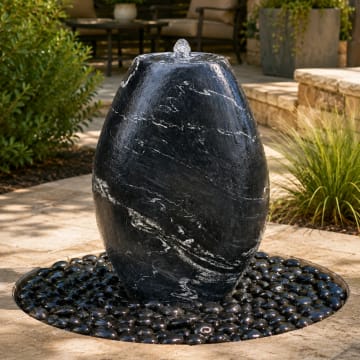
$1,999.99
Arrives in 7–12 business days
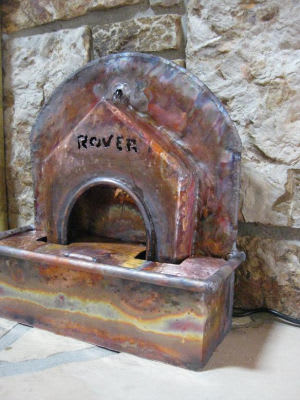
$1,590.00
Arrives in 4–8 wks
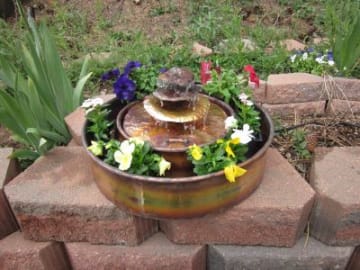
$1,490.00
Arrives in 4–8 wks
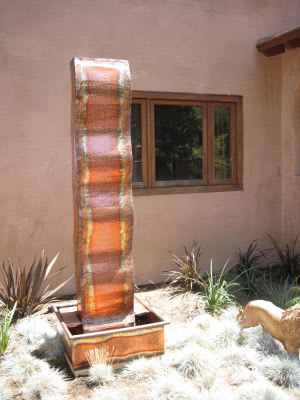
$12,990.00
Arrives in 4–8 wks
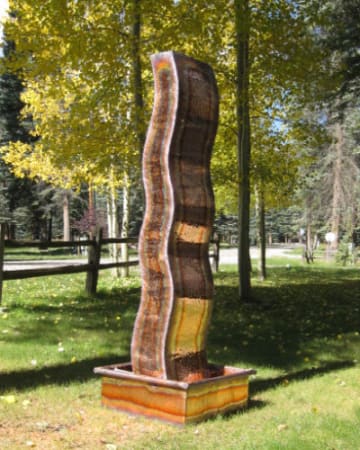
$7,990.00
Arrives in 4–8 wks
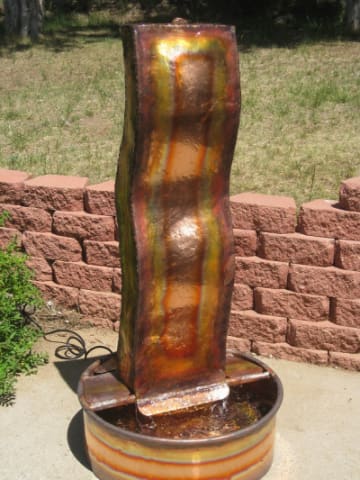
$5,990.00
Arrives in 4–8 wks
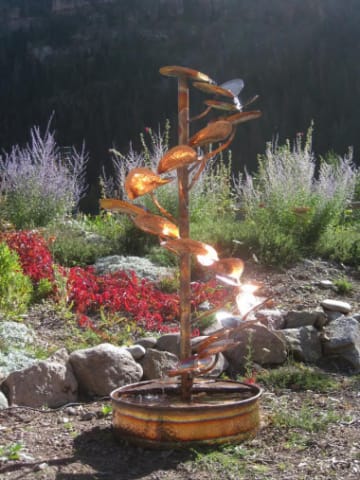
$5,990.00
Arrives in 4–8 wks
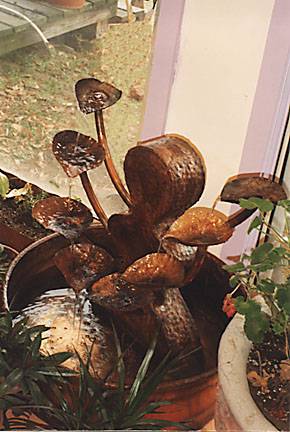
$4,990.00
Arrives in 4–8 wks
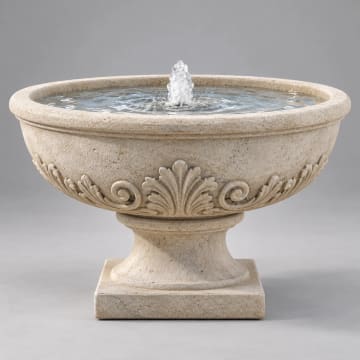
$1,349.00
Arrives in 5–7 wks
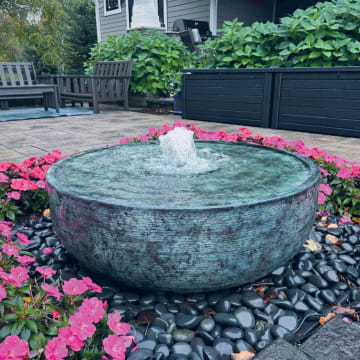
From $3,899.99
Arrives in 7–12 business days
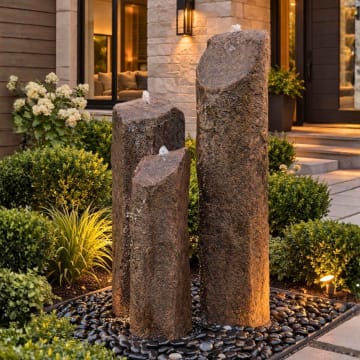
$8,499.99
Arrives in 7–12 business days
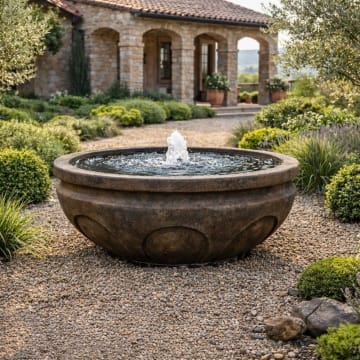
From $1,399.00
Arrives in 5–7 wks
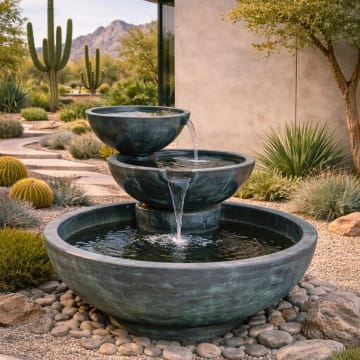
$1,849.00
Arrives in 5–7 wks
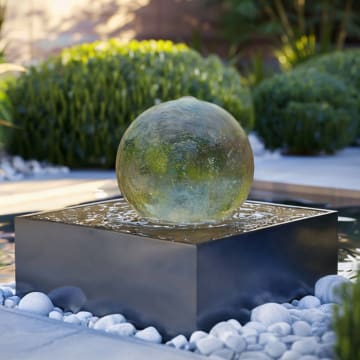
From $7,995.00
Arrives in 6–8 wks
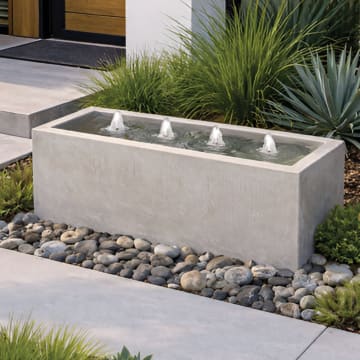
$1,479.00
Arrives in 5–7 wks
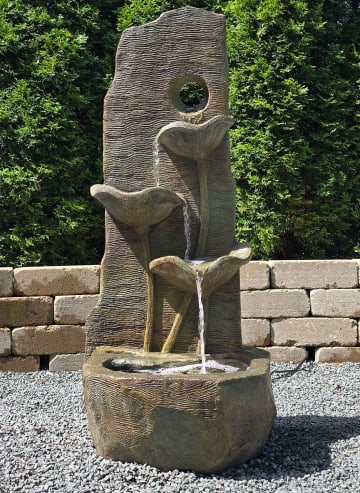
$986.00
Arrives in 4–8 wks
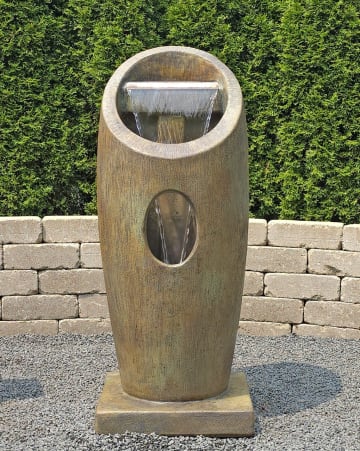
$1,440.00
Arrives in 4–8 wks
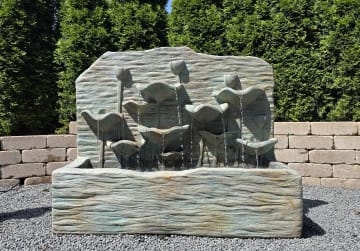
$1,638.00
Arrives in 4–8 wks
Outdoor Fountain Buying Guide
There are a few things worth considering before choosing a fountain: how much space you have, how you want the water to sound, and whether you prefer something traditional or modern.
Garden fountains come in just about every shape and size. Small bubbling fountains fit nicely among plants or beside a walkway, while larger freestanding designs work well in open lawn areas. If you're placing one near a seating area, pay attention to the water flow. Even a relatively small fountain can make a noticeable sound.
If you like the look of a traditional European courtyard, a two-tier or three-tier fountain is worth considering. Water spills from the upper bowls into the lower basin, creating the familiar cascading effect. Larger models can be quite heavy, so check the dimensions and total weight before ordering.
A wall fountain is a good option when you have limited floor space or want a water feature along a patio wall or courtyard. Some have a gentle stream flowing into a basin; others have water running down a broad vertical surface. Check whether the model is freestanding or requires secure mounting to a suitable structure.
Sphere fountains work especially well with contemporary landscaping. Water flows over a round stone, metal, or other sculptural surface and returns to a basin or reservoir. Some designs have a fairly quiet flow, while others create more water movement. The size and finish of the sphere can make a big difference in its overall appearance.
Solar fountains can be a practical choice for a sunny garden without easy access to an electrical outlet. Keep in mind that not every solar fountain runs continuously. Some operate only in direct sunlight, while models with battery storage may continue running when sunlight is limited.
Fire and water features combine flowing water with gas-powered flames. They're often used around outdoor entertaining areas, pool decks, and modern patios. Unlike a basic recirculating fountain, these features have additional fuel, ventilation, and clearance requirements. Review the specifications and arrange for a qualified local professional to handle the necessary connections.
A fountain's material affects more than its appearance. It also determines how heavy it is, how the surface ages, and what kind of care it needs.
Cast Stone: A popular choice for traditional garden and tiered fountains. It has the substantial look and feel of stone and comes in many finishes. The tradeoff is weight. Larger cast stone fountains may arrive in several pieces and need a properly prepared, level surface. Freezing temperatures can also be a concern if water is allowed to collect in the fountain.
GFRC (Glass Fiber Reinforced Concrete): GFRC uses glass-fiber reinforcement to produce concrete forms that can be lighter than comparable conventional concrete pieces. It's especially useful for larger designs where weight matters. Construction methods and finishes vary, so compare the specifications of individual models rather than assuming every GFRC fountain performs the same way.
Stainless Steel: A good match for modern water walls and fountains with straight, clean lines. Stainless steel doesn't develop the same rust characteristics as ordinary steel, but it isn't maintenance-free. Hard-water spots, fingerprints, and mineral deposits can show on the surface, and the grade of steel matters in coastal environments.
Copper: Copper is often chosen for its color and the way it changes over time. A bright copper finish will gradually darken or develop a patina when exposed to the elements. If you want it to keep its original shine, expect more upkeep. If you prefer an aged appearance, that natural change can be part of the appeal.
Resin and Lightweight Composites: These are worth considering when you want a fountain that's easier to move or reposition. Many are designed to resemble stone without the same weight. Quality varies, though. Check the manufacturer's guidance for sun exposure, freezing temperatures, and long-term outdoor use.
Marble: Natural marble has a distinctive appearance because the veining and coloration differ from piece to piece. It works well for formal gardens and substantial architectural fountains. It's also heavy, relatively expensive, and sensitive to certain cleaning chemicals. Marble needs more careful surface treatment than many synthetic materials.
If you're deciding between two materials, consider where the fountain will be placed and how much upkeep you're willing to do. The most expensive material isn't automatically the best choice for every backyard.
One mistake to avoid is choosing a fountain based only on its height. The width of the basin, available walking space, and amount of splashing matter just as much.
For a small patio, a compact bowl fountain or wall fountain may be all you need. A medium-sized backyard can usually accommodate something larger, such as a freestanding garden fountain or a two-tier design. Large courtyards and circular driveways often have room for substantial tiered fountains or custom water features.
Before ordering, check a few measurements:
Overall dimensions: Measure the full width of the fountain, including its basin, not just the centerpiece.
Weight: Large stone fountains can be extremely heavy. Make sure the intended surface can support the filled fountain safely.
Electrical access: Most plug-in fountains need an appropriate outdoor electrical connection.
Splash and wind: Keep the fountain far enough from seating, doors, and walkways to minimize unwanted overspray.
Service access: Leave room to reach the pump, refill the reservoir, and clean the basin.
Think about sound, too. A fountain with a short, gentle water drop will usually sound different from one where water falls several feet into a deep pool.
If you're unsure about the size, send us the dimensions of your space and the fountain you're considering. We can help you compare the options before you order.
The biggest difference between solar and plug-in fountains is how consistently the pump can run.
A basic solar fountain depends on sunlight reaching its solar panel. On a bright day, it may work very well. Under heavy cloud cover or in the shade, the flow may slow down or stop. Some models include battery storage, although running time depends on the battery and the amount of sunlight received.
An electric fountain uses a plug-in pump, making it a better choice when you want steady water movement throughout the day. This is particularly useful for larger fountains that need more water flow.
Operating costs are usually modest for smaller pumps. As an example, a 40-watt pump running 24 hours a day uses 28.8 kilowatt-hours in a 30-day month. Your actual cost depends on your electricity rate and the pump supplied with the fountain.
Whatever type you choose, use equipment rated for the intended outdoor conditions. Plug-in installations also need suitable electrical protection.
Outdoor fountains need some routine attention, but most everyday care is straightforward. Always follow the instructions for your particular model and finish.
Keep enough water in the basin. Evaporation and splashing can lower the water level, especially during summer. Many fountain pumps can be damaged if they run dry.
Clear away leaves and debris. Leaves, dirt, and other material can collect around the pump intake and restrict water flow. Check the basin and accessible pump screens periodically.
Watch for mineral deposits. If you have hard water, you may notice a white buildup on the fountain surface. Use cleaning methods approved for that material. Acidic cleaners, for example, can damage marble and some stone finishes.
Check the water flow. If a fountain suddenly starts running more slowly, first check the water level and look for debris obstructing the pump or tubing.
Prepare for freezing weather. Water expands when it freezes, which can crack basins and damage pumps. Many outdoor fountains need to be drained and winterized before freezing temperatures arrive. Follow the manufacturer's instructions for your model.
Keep splashing under control. A fountain that's not level or has excessive pump flow may lose more water than expected. Wind can also carry water outside the basin.
A little regular attention can prevent many common fountain problems and help keep the water flowing as intended.
Not every space works with a standard catalog fountain. You may need a particular height, an unusual basin shape, a specific stone finish, or a feature designed to match existing architecture.
That's where a custom fountain makes sense.
At Fountains.com, we work with customers on custom fountains for homes, courtyards, building entrances, hotels, and commercial properties. Projects can range from relatively simple modifications to larger water walls, reflecting pools, sculptural fountains, and architectural water features.
You don't need a finished design to start the conversation. A photo of something you like, a rough sketch, or the dimensions of your space can help us understand what you're trying to accomplish.
Custom fountain pricing depends on the materials, dimensions, water effects, and complexity of the design. We can review your ideas and discuss the available options before preparing a quote.
Learn more about our custom fountain designs or contact us to discuss your project.
Smaller decorative fountains can cost a few hundred dollars, while larger cast stone, marble, and architectural fountains can run into the thousands. For example, a large tiered fountain with a separate basin generally costs more than a compact self-contained fountain. Materials, size, finish options, and shipping all affect the final price. Custom fountains are quoted based on the individual project.
It depends on the pump. A small fountain with a 20-watt pump running continuously uses 14.4 kWh in a 30-day month. A 40-watt pump uses 28.8 kWh over the same period. Multiply that by your electricity rate to estimate the monthly cost. Some larger fountains use considerably more power, so check the product specifications.
If you want consistent water flow throughout the day, an electric fountain is usually the safer choice. Solar fountains work well in sunny areas, particularly where running electricity would be inconvenient. Just remember that basic solar pumps may stop when the sun goes behind the clouds. Battery-equipped models can offer more flexibility.
Cast stone, GFRC, stainless steel, copper, and properly selected natural stone can all work well outdoors. The best choice depends on your climate and the specific product. Cast stone is popular for traditional fountains, while stainless steel works well for modern designs. In areas with freezing winters or coastal salt exposure, pay special attention to the manufacturer's material and care recommendations.
Many can remain outdoors if properly winterized, but that doesn't mean they should be left full of water. Freezing water can damage stone basins, plumbing, and pumps. Some models require draining, pump removal, or protective storage. Check the manufacturer's recommendations before temperatures drop below freezing.
Start with the area where you plan to put it. Make sure there's enough room for the entire basin and space around it for walking and cleaning. In smaller yards, wall fountains and compact freestanding models often work well. Larger gardens and courtyards can accommodate wider, taller designs. Also check the total filled weight if the fountain will sit on a patio, deck, or other constructed surface.
Yes. Fountains.com offers custom fountain options for residential and commercial projects. If you have a particular size, material, or style in mind, share your measurements, photos, or drawings with our team. We can review the project and discuss what's possible. Visit our Custom Fountains page for more information.
It depends on the fountain. Smaller models may ship through parcel carriers, while heavy stone fountains and larger water features often require freight delivery. Some are packed on pallets or shipped in separate sections. Before ordering, check the product's delivery details and make sure the shipment can be received and moved safely at your property.